Choosing the right flooring material is essential for maintaining durable, attractive, and easy-to-clean concrete surfaces. Industrial facilities, commercial buildings, warehouses, and garages all face different flooring challenges. Suitable floor coating paint can help protect concrete against abrasion, moisture, chemical exposure, and everyday wear while improving the overall appearance of a space. Understanding the available coating technologies and their applications makes it easier for contractors and businesses to select the right solution.
Understanding Modern Floor Coating Paint
Floor coating paint is a specialized protective material designed to improve the performance of concrete surfaces. Unlike ordinary decorative paint, resin-based floor coatings can form a stronger protective film when applied correctly to a properly prepared substrate.
Depending on the formulation, these materials can provide chemical resistance, surface hardness, abrasion protection, and decorative finishes. They are available in different colors, gloss levels, and application thicknesses to meet the requirements of various projects.
Three Common Types of Floor Coating Materials
1. Epoxy Floor Coatings
Epoxy coatings are widely used in industrial and commercial interiors. They offer strong adhesion to prepared concrete, a hard surface, and resistance to many chemicals.
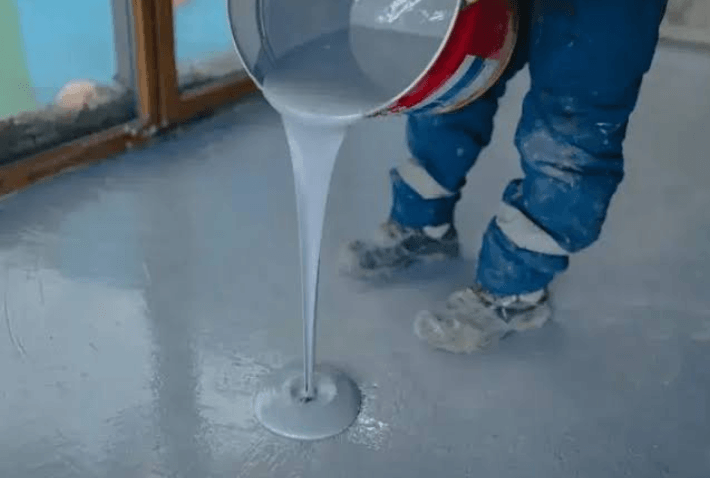
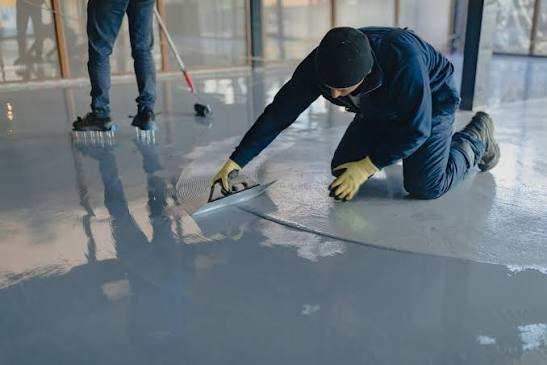
Common applications include manufacturing plants, warehouses, workshops, laboratories, and garages. Self-leveling epoxy products are particularly useful for creating smooth, seamless floors. Decorative metallic, marble-effect, and colored-sand finishes are also available for projects where appearance is important.
2. Polyurethane Floor Coatings
Polyurethane coatings are valued for their flexibility, abrasion resistance, and protective performance. Depending on the formulation, they can be used as colored floor coatings or protective topcoats.
They are suitable for selected commercial and industrial environments where floors experience regular movement, cleaning, and surface wear.
3. Polyaspartic Floor Coatings
Polyaspartic coatings are known for rapid curing and good UV stability in suitable formulations. They are frequently considered for projects where installation speed, weather resistance, and color stability are important.
Their fast-curing properties can help reduce project downtime when the substrate, application conditions, and complete coating system are suitable.
Why Multi-Layer Flooring Systems Are Important
Professional flooring installations often combine several materials to achieve the required performance.
- Primer: Creates a bonding interface between the concrete and subsequent coating layers. Specialized moisture vapor barrier primers may be appropriate for certain concrete moisture conditions.
- Midcoat: Adds thickness, improves surface uniformity, and can provide a base for decorative materials such as quartz, flakes, or metallic pigments.
- Topcoat: Forms the exposed surface and provides the final appearance, with properties such as abrasion resistance, chemical protection, and UV stability depending on the product.
Selecting compatible materials is essential because the performance of the complete flooring system depends on how its individual layers work together.
Matching Floor Coating Paint to Different Applications
Different facilities need different coating characteristics.
Industrial warehouses: Require resistance to forklift movement, equipment traffic, and repeated loading.
Commercial showrooms: Often prioritize glossy finishes, decorative effects, and easy cleaning.
Garages and parking facilities: May need resistance to oil stains, tire marks, abrasion, and suitable anti-slip textures.
Laboratories and production areas: May require seamless finishes and resistance to specific cleaning chemicals or processing materials.
Outdoor floors should also be evaluated for sunlight, rainfall, and temperature changes before choosing a protective coating.
The Importance of Surface Preparation
A successful coating installation begins with the concrete substrate. Dust, oil, cracks, weak concrete, and excessive moisture can affect adhesion and cause premature coating problems.
Mechanical grinding is commonly used to remove contaminants and create an appropriate surface profile. Damaged areas should be repaired with compatible materials, while moisture testing helps determine whether a specialized primer is necessary.
Contractors should also follow the manufacturer’s instructions for mixing ratios, pot life, application thickness, and curing time.
Selecting a Reliable Coating Manufacturer
For contractors, distributors, and private-label businesses, choosing a manufacturer with a broad product range can simplify material sourcing. JINCHENG provides epoxy, polyurethane, and polyaspartic flooring materials, including primers, midcoats, topcoats, and seasonal formulations.
The company also offers OEM and ODM services for businesses seeking customized formulations and packaging. Before purchasing in bulk, buyers should review technical data sheets, safety information, application instructions, and product samples.
Conclusion
Professional floor coating paint can improve concrete protection, appearance, and maintenance when the right material is selected. Understanding resin types, coating layers, application conditions, and project requirements helps businesses make informed decisions. With proper preparation and compatible products, contractors can create flooring solutions suited to a wide range of commercial and industrial environments.