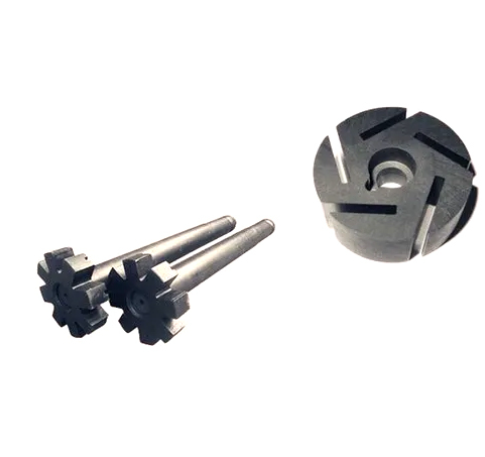
Replacing a worn-out degassing rotor might seem like a straightforward transaction, but for operations running continuous aluminum processing lines, getting this purchase right has an outsized effect on downstream metal quality, production uptime, and long-term operating costs. A graphite rotor that is undersized, poorly matched to furnace conditions, or manufactured from an inadequate material grade can quietly degrade metal quality for weeks before the problem is fully traced back to the component itself. Understanding what specifications actually matter, how sizing works, and how to think about the true cost of a rotor purchase helps buyers avoid this kind of costly, hard-to-diagnose mistake.
Starting With the Right Specifications
Before requesting a quote for a graphite rotor, buyers should gather several key pieces of information about their existing degassing setup and operating conditions. Outer and inner diameter of the rotor housing, along with the required shaft length, are the most basic starting measurements, since these determine whether a given rotor will physically fit the existing degassing unit. Beyond basic dimensions, operating temperature range and the specific alloy or metal being processed matter significantly, since different aluminum alloys and processing temperatures can place different demands on rotor material and treatment requirements.
Production volume and duty cycle are equally important, though often overlooked by first-time buyers. A rotor operating in a facility running near-continuous production shifts will experience very different wear patterns than one used in a lower-volume, intermittent operation, and this distinction should inform decisions around material grade and anti-oxidation treatment level, since higher-duty applications generally justify the additional upfront cost of more durable treated or ceramic-coated options.
| Specification to Confirm | Why It Matters |
| Rotor outer/inner diameter | Determines physical fit with existing housing |
| Shaft length | Must match degassing unit configuration |
| Operating temperature | Confirms material grade suitability |
| Alloy being processed | Affects chemical compatibility requirements |
| Production duty cycle | Informs material and treatment level decision |
| Machining tolerance needed | Affects fit precision and vibration during rotation |
Understanding Bulk Density and Its Practical Impact
Bulk density is one of the more technical specifications buyers encounter when comparing graphite rotor options, but its practical impact is worth understanding even for non-technical purchasing decisions. Higher bulk density generally correlates with greater mechanical strength and improved resistance to erosion from molten metal flux, meaning rotors manufactured from higher-density graphite typically deliver longer service life under equivalent operating conditions compared to lower-density alternatives. This density difference, while sometimes subtle on a specification sheet, can translate into meaningfully different replacement frequencies and total cost of ownership over the life of an operation’s degassing program.
Similarly, porosity , the amount of internal void space within the graphite structure , affects how readily molten metal and gases can penetrate the material during operation, with lower porosity generally correlating with better resistance to flux penetration and subsequent erosion. Buyers comparing rotor options from different suppliers should request this data specifically, since it is rarely obvious from a simple product photo or basic description alone.
Comparing Anti-Oxidation and Ceramic-Coated Options
Buyers evaluating a graphite rotor purchase will typically encounter a choice between standard anti-oxidation-treated graphite and more advanced ceramic-coated or composite silicon nitride alternatives. Anti-oxidation-treated rotors represent the more common, moderately priced option, offering meaningfully extended service life compared to untreated graphite while remaining accessible for operations of most sizes. Silicon nitride or ceramic-coated variants sit at a higher price point but offer substantially greater erosion resistance, making them particularly attractive for operations dealing with especially harsh flux conditions or those prioritizing minimal downtime from frequent rotor changes.
The right choice between these options ultimately comes down to a facility’s specific production economics. Operations with lower production volumes or less aggressive operating conditions may find that standard treated rotors deliver perfectly adequate service life relative to their lower upfront cost, while high-volume, continuous operations often find that the extended service intervals of premium ceramic-coated rotors justify their higher initial price through reduced changeover frequency and associated production interruption.
Calculating True Cost Per Operating Hour
Rather than comparing graphite rotor purchases purely on upfront unit price, sophisticated buyers increasingly evaluate options based on estimated cost per operating hour, factoring in both the purchase price and the expected service life under their specific operating conditions. A less expensive rotor that requires replacement twice as often as a premium alternative may actually represent a higher effective cost once labor for changeover, production downtime during replacement, and the cumulative purchase price of multiple units are all factored into the calculation.
This calculation becomes particularly meaningful for operations where rotor replacement requires furnace shutdown or otherwise interrupts continuous production, since the indirect costs of downtime frequently exceed the direct price difference between standard and premium rotor options. Buyers who track this data over time, comparing actual service life achieved against different rotor specifications, build valuable internal knowledge that makes future purchasing decisions considerably more informed than relying on supplier claims alone.
Custom Versus Standard Sizing
While some degassing systems use relatively standardized rotor dimensions, many facilities operate equipment with unique specifications that require custom-manufactured components rather than off-the-shelf standard sizes. Buyers should confirm early in the sourcing process whether their existing equipment requires custom dimensions, since this significantly affects both lead time and the level of technical documentation needed to place an accurate order. Providing detailed drawings or even a sample of the existing rotor being replaced generally produces the most accurate custom manufacturing outcome, reducing the risk of dimensional mismatches that could delay installation or require costly on-site modification.
Working With Suppliers on Technical Specification
Because graphite rotor performance depends on such a specific combination of material grade, treatment process, and precise dimensional fit, working with a supplier who offers genuine technical consultation , rather than simply processing a basic order , tends to produce better long-term outcomes. A knowledgeable supplier should be willing to discuss a facility’s specific alloy, temperature range, and duty cycle in detail before recommending a particular material grade and treatment level, helping buyers avoid both the underperformance risk of an inadequately specified rotor and the unnecessary cost of over-specifying a component beyond what the actual operating conditions require.
Buyers should also ask about expected lead times for custom orders, since properly manufactured graphite rotors , particularly those requiring specific anti-oxidation treatment or ceramic coating , typically require meaningful production time that should be factored into maintenance planning well ahead of an anticipated replacement need, rather than treated as an emergency same-day purchase after an existing rotor has already failed.
Planning Ahead Rather Than Reacting to Failure
Operations that treat graphite rotor replacement as part of a planned, proactive maintenance schedule rather than a reactive response to failure generally achieve better overall production consistency and avoid the compounding costs associated with emergency sourcing and unplanned downtime. Establishing baseline expectations for service life under a facility’s specific operating conditions, then scheduling replacement orders with adequate lead time before that expected service life is reached, allows for more predictable maintenance budgeting and reduces the risk of unexpected metal quality issues emerging from a degraded, near-end-of-life rotor still in active service.
Documenting Performance for Future Reference
One habit that separates well-run maintenance operations from reactive ones is documenting how each rotor purchase actually performs once installed. Simple records , installation date, observed service life, any performance issues noted along the way , build a practical internal reference that makes every future purchasing decision easier and more evidence-based than starting from scratch each time a replacement is needed. Over a handful of replacement cycles, this kind of record often reveals patterns that a single purchase decision never would, such as a particular grade consistently underperforming under a facility’s specific alloy or temperature conditions.
Making a Well-Informed Purchase
Ultimately, buying a graphite rotor well requires moving beyond a simple price comparison to consider material grade, treatment options, precise dimensional fit, and the true cost per operating hour under a facility’s specific production conditions. Reviewing a detailed graphite rotor specification range before finalizing a purchase gives buyers the technical detail needed to make this kind of informed comparison, rather than defaulting to whichever option happens to have the lowest listed price. For operations working through a custom sizing or upgrade decision, consulting directly with a specialis graphite rotor manufacturer remains the most reliable way to match component specification to real operating demands and avoid the hidden costs of a poorly matched purchase.