Two Different Stories in the Same Data
Announcements about new factories keep piling up. Chipmakers, battery producers, and other manufacturers keep unveiling multibillion-dollar plans to build in the United States, and public officials keep pointing to these announcements as proof of a manufacturing comeback. But when analysts look at what is actually happening on the ground, measured in permits pulled, construction spending recorded, and dirt actually moved, the picture is far less uniform than the headlines suggest. Overall factory construction spending has softened from its recent peak, even as a handful of enormous, highly specialized projects continue moving forward at full speed. For contractors and material suppliers trying to figure out where the real opportunity sits, understanding this split matters a great deal.
The gap between announcement and construction start is not new to this industry, but it has become especially visible lately. Some planned projects have been paused, scaled back, or quietly shelved as financing conditions, energy costs, or shifting incentive programs changed the math for the companies behind them. At the same time, a smaller number of flagship projects, particularly in semiconductors, are moving forward with enormous budgets and aggressive timelines. The net effect is a market that looks strong in press releases but is actually narrowing in terms of who gets to build what.
Why Semiconductor Fabs Are the Exception, Not the Rule
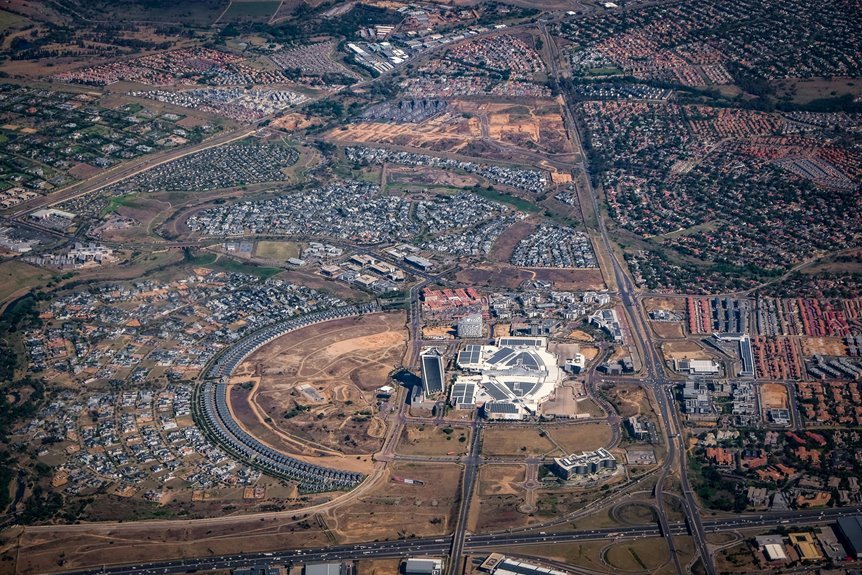
Semiconductor fabrication plants have become the clearest example of this divide. A handful of companies have committed staggering sums to new fabs across several states, building facilities that can span more than a million square feet of cleanroom space and take years to bring from groundbreaking to first production. These projects carry a level of technical complexity that sets them apart from almost any other kind of industrial construction, requiring extraordinarily precise mechanical and electrical systems, ultra-controlled environments, and utility infrastructure built to standards most commercial projects never approach.
This complexity, combined with the sheer scale of investment involved, means semiconductor construction has continued climbing even as broader factory construction spending has cooled. It has effectively become its own category, separate from the general manufacturing construction market that includes smaller plants for consumer goods, automotive parts, and other less specialized production. Contractors who have positioned themselves to compete for this kind of work, often through years of building relationships with the specialized engineering firms and technology companies involved, are seeing a very different market than contractors chasing more conventional industrial projects.
What This Means for General Contractors Chasing Industrial Work
For contractors outside the small circle of firms already embedded in semiconductor and advanced manufacturing work, the broader industrial construction market looks considerably tighter than the headlines about a manufacturing renaissance might suggest. Some previously announced projects tied to clean energy manufacturing, in particular, have been canceled or delayed as funding support and policy direction shifted, leaving contractors who had positioned themselves around that pipeline scrambling to find replacement work.
This unevenness means contractors need to be more selective and more realistic about where genuine opportunity lies. A general contractor evaluating whether to chase a manufacturing project should look closely at how far along the funding, permitting, and financing actually are, rather than relying on an announcement alone. Projects backed by committed capital and clear site plans behave very differently from projects still working through preliminary feasibility studies, even when both get covered in the same breathless news coverage.
Some contractors have learned this lesson the hard way, investing in specialized equipment, additional staff, or new certifications in anticipation of a wave of projects that never fully materialized. Others have taken a more conservative approach, waiting for a project to clear key financing and permitting milestones before committing significant internal resources to pursue it. Neither approach guarantees success, but firms that build in some flexibility, rather than betting heavily on a single announced project, tend to weather the gap between announcement and actual construction more comfortably.
The Complexity Premium: Why These Projects Are Different
Even setting aside semiconductor fabs, modern manufacturing construction tends to be more demanding than a typical commercial building project. Facilities producing batteries, precision electronics, or pharmaceuticals often require specialized process utilities, controlled environments, and equipment integration that goes well beyond standard mechanical and electrical scope. Contractors moving into this space for the first time often underestimate how much coordination is required between the building shell and the specialized process equipment that will eventually go inside it.
This complexity carries real cost and schedule risk if it is not planned for properly from the start. A contractor accustomed to conventional commercial or light industrial work can find themselves badly exposed if they price a manufacturing project using assumptions built for a simpler building type. Successful firms in this space tend to build in extra diligence at the estimating stage specifically because the margin for error on a facility this specialized is much smaller than on a standard warehouse or office building.
See also: Business continuity planning and management
Material Suppliers Navigating a Bifurcated Market
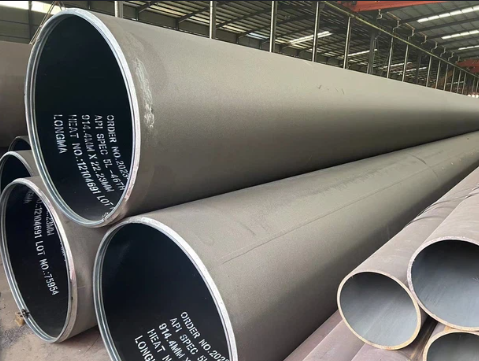
Material suppliers are experiencing this same split market from their side of the business. Suppliers positioned near active semiconductor and advanced manufacturing megaprojects are seeing strong, sustained demand for structural steel, specialized concrete, and process piping materials, often with long lead times and premium pricing tied to the technical specifications these facilities require. Suppliers whose business depends more heavily on conventional manufacturing construction, meanwhile, are contending with a softer pipeline as more routine factory projects get delayed or scaled back.
This divide has pushed some suppliers to reassess which segment of the manufacturing construction market they are best positioned to serve. Firms with the certifications, quality control processes, and documentation practices required for highly regulated, technically demanding facilities are finding real opportunity, even as the broader manufacturing construction market softens. Suppliers without that specialized capability are having to compete harder for a shrinking pool of more conventional projects, or look toward other sectors, such as data centers or infrastructure work, to fill gaps in their order books.
Bidding Discipline Matters More When the Pipeline Narrows
As the pool of genuinely active manufacturing projects narrows outside the semiconductor space, competition for the work that does exist has intensified. Contractors chasing a smaller number of viable opportunities cannot afford loose estimating or padded contingencies that price them out of contention, but they also cannot afford to underbid a complex facility and absorb the difference once construction begins. Getting the balance right requires a disciplined, detailed approach to every bid rather than relying on rough historical averages from simpler projects.
This is part of why more firms competing for industrial and manufacturing work are leaning on professional construction takeoff services to build out accurate, defensible numbers before committing to a bid. A precise, detailed takeoff gives a contractor a clearer picture of true scope and cost on a specialized facility, which matters enormously in a market where the projects that are actually moving forward tend to be scrutinized closely by owners who are deploying enormous amounts of capital and expect precision in return. Contractors who can demonstrate that kind of rigor at the bidding stage tend to stand out to owners choosing between a handful of qualified firms for a high-stakes project.
Labor and Specialty Trade Squeeze
Even with a narrower pipeline of active projects, finding enough skilled labor to execute these builds remains a persistent challenge. Advanced manufacturing facilities require electricians, pipefitters, and other specialty tradespeople with experience in cleanroom construction, precise mechanical systems, and process utility installation, a skill set that is far less common than general commercial construction experience. Contractors report that recruiting and retaining this kind of specialized talent has become one of the biggest constraints on how many projects they can realistically pursue at once, regardless of how much work is technically available.
This labor constraint is pushing firms to move recruiting timelines earlier and to offer more competitive compensation to hold onto experienced superintendents and project managers who understand the unique demands of these facilities. Firms that build a reputation for successfully delivering complex manufacturing projects tend to find it easier to attract and retain this kind of talent, creating a cycle where established players in this space have an advantage over newer entrants trying to break in.
Getting Material Planning Right on Complex Builds
Beyond labor, material planning on these projects carries its own layer of complexity. Specialized facilities often require materials with tight technical specifications, extended lead times, and documentation requirements that go well beyond a standard bill of materials for a conventional building. A miscount or a missed specification on a project of this scale and cost can translate into significant delays waiting for a replacement order, particularly for materials that are not readily available off the shelf.
This is where dedicated construction material takeoff services have become increasingly valuable for contractors working on these complex builds. A detailed material takeoff that accounts for the specific grades, quantities, and technical requirements of a manufacturing project helps a contractor avoid costly procurement surprises once construction is underway, and gives project owners more confidence that the contractor fully understands the scope before committing to a schedule. On projects where a single specialized material shortage can stall an entire production line’s completion date, that level of upfront accuracy is not a luxury, it is a basic requirement for staying in contention for this kind of work.
Diversifying Beyond Manufacturing
Given how concentrated genuine opportunity has become around a relatively small number of flagship manufacturing projects, many contractors and suppliers are hedging by diversifying into adjacent sectors rather than depending entirely on the manufacturing construction narrative. Data center construction, infrastructure work tied to federal and state funding programs, and power generation projects are all drawing interest from firms that built capability in complex, highly technical construction but do not want to depend solely on a manufacturing pipeline that has proven uneven in practice.
This kind of diversification can also work in reverse, with firms that built their reputation in other complex sectors now pursuing manufacturing work as an extension of their existing capabilities. Contractors experienced in data center construction, for example, often already have relevant experience with process utilities, redundant power systems, and tightly controlled environments, making the transition into certain types of manufacturing work a more natural fit than it might first appear.
Material suppliers are following a similar logic. A supplier that built strong relationships and technical capability serving semiconductor or pharmaceutical construction is often well positioned to serve data center or advanced power projects that share similar specifications and documentation demands. Recognizing these overlaps early, rather than treating each sector as a completely separate market, can help a supplier keep steady volume moving through their operation even as any single sector goes through its own cycle of growth and slowdown.
Looking Ahead
The manufacturing construction story is unlikely to resolve into a single, simple narrative anytime soon. A handful of enormous, highly specialized projects will likely continue driving eye-catching investment figures, while the broader base of more conventional manufacturing construction remains more uncertain and sensitive to shifts in financing, policy, and demand. For contractors and material suppliers, success in this environment depends less on chasing every headline and more on honest, disciplined evaluation of which specific opportunities are backed by real capital and a credible path to construction. Firms that combine that discipline with sharper estimating and planning practices will be the ones best positioned to win the work that is genuinely available, rather than the work that only exists in a press release.